
 EN

Why Custom Wrapping Tissue Paper Improves Perceived Gift Value
A gift can be valuable before it is opened, but the customer only sees that value through the packaging sequence. Custom wrapping tissue paper gives a retailer, maker, or brand a controlled first layer: it can soften the reveal, frame the product, and carry a recognizable visual cue without turning the outer pack into a billboard. From a B2B packaging buyer’s perspective, the decision starts with the pack-out routine rather than a generic claim about premium paper.
That distinction matters. A premium-looking order is not created by a logo alone. It comes from the way the tissue opens, the amount of empty space around the item, the color relationship with the box or mailer, and whether the packing team can repeat the result consistently. When those details are aligned, custom wrapping tissue paper can make a modest product presentation feel considered rather than improvised.
Perceived gift value begins with the opening moment
Customers form an impression before they handle the item itself. A neatly folded sheet, a restrained repeat pattern, or a color that matches the brand palette creates a pause between opening the shipping box and seeing the product. That pause is useful: it makes the pack feel intentional and gives the recipient a clearer sense that the order was prepared for them.
Custom tissue paper is especially effective when it does one job well. It may line a gift box, wrap a folded garment, separate delicate components, or hide the product until the final reveal. If the paper is mainly for presentation rather than protection, this comparison is more relevant. Tissue should not be treated as a substitute for cushioning, corrugated inserts, or other protective packaging where those are needed.
At first this may look like a color decision; more accurately, it is a color-and-workflow decision. A rich solid shade may work for a luxury accessory, while a light pattern can support a cheerful retail order. In both cases, the paper has to be easy for staff to pick up, fold, and place without slowing a busy packing table.
How custom wrapping tissue paper adds value without overdesigning
It creates a recognizable brand layer
Branded packaging does not need to repeat a large logo across every surface. A small repeat, simple monogram, short phrase, or limited-color pattern can make the wrapping recognizable while leaving room for the product to lead. The visual result is often calmer when the artwork is designed around folds rather than as a full-page advertisement.
This helps when a customer receives several packages from different sellers. The outer shipping label may be forgotten, yet the inner wrapping can become a familiar cue. For that reason, custom wrapping tissue paper is most effective when its artwork follows the wider packaging system: box color, sticker, thank-you card, and seasonal insert should feel related without being identical.
It makes routine packing feel more deliberate
Gift value is often communicated through care, not extravagance. Tissue can visually separate a product from the box, conceal it before the reveal, and reduce the bare-space effect that can make an otherwise good order seem unfinished. The question changed from “what is the paper price?” to “what format reduces unnecessary handling for this pack-out?”
For example, a sheet that is too small may force staff to use two pieces or leave corners exposed. A sheet that is much too large can create bulky folds and waste material. Neither outcome supports a refined presentation. Requesting samples with the actual product, box, and packing method is more useful than choosing a size from a catalog alone.
It supports thoughtful personalization at different order volumes
Customization can be scaled. Some buyers may choose a logo repeat on a standard sheet; others may test a seasonal pattern, a limited gift collection, or a color variation for a campaign. Search results for custom tissue offerings commonly show choices such as size, color, paper weight, quantity, and one-sided artwork. Those options are prompts for an RFQ, not universal specifications: the available choices should be confirmed with the supplier and checked against the intended folding method.
For growing brands, custom tissue paper can be a practical place to introduce a signature visual element before investing in fully printed rigid boxes. The appropriate choice depends on order volume, storage space, artwork complexity, and whether the packer can preserve the intended fold from one order to the next.
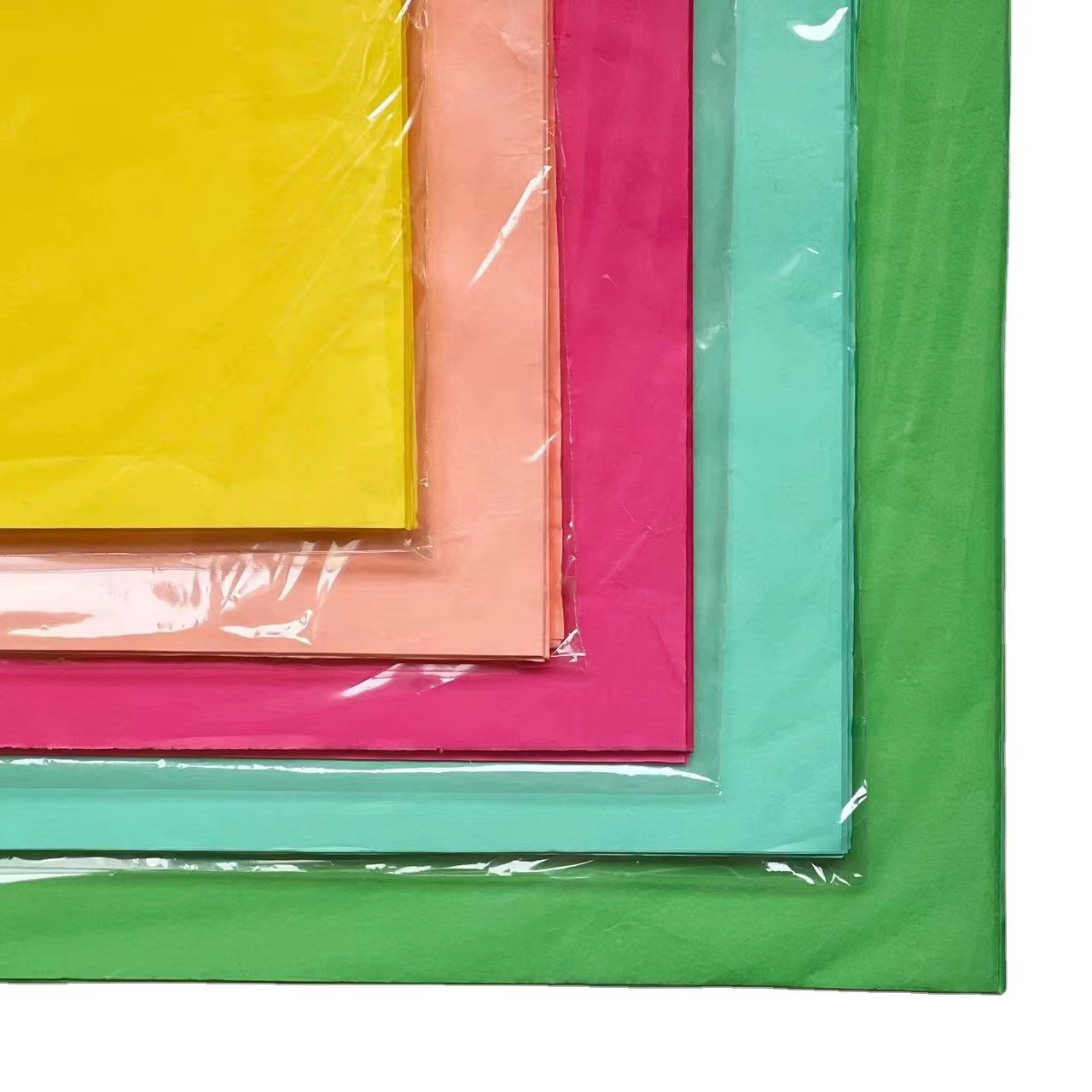 A considered tissue layer can make the opening sequence feel more intentional.
Choose the right format for the actual pack-out
Rather than choosing a shade first, clarify whether the tissue is for lining, wrapping, or light separation. That answer determines the practical questions to ask.
- Product dimensions: Measure the item in the state it will be packed, including tags, ribbon, or secondary wrap.
- Box or mailer dimensions: Check how much tissue is visible after the package is opened and whether the edges can be folded neatly.
- Sheet versus roll workflow: Sheets can simplify consistent folds for repeatable gift packs; rolls may suit variable lengths or high-throughput cutting routines. Confirm the actual packing routine before choosing.
- Print placement: Review a proof while it is folded around the product. A centered mark on a flat sheet may disappear once the pack is closed.
- Color interaction: Test tissue against the product, carton, adhesive, and any card insert under normal packing-area lighting.
These checks make the purchase conversation more specific. They also help avoid treating custom tissue paper as a purely decorative material when it is part of a repeatable operational process.
Quality questions to ask before ordering custom tissue paper
A useful supplier discussion separates confirmed specifications from preferences. Ask which paper weights, sheet sizes, print colors, and minimum quantities are currently available for the selected construction. Ask for a physical or production-representative sample when color, opacity, fold behavior, or print appearance will affect the gift presentation.
If sustainability communication is important, do not assume that every paper option supports the same claim. The Forest Stewardship Council explains that chain-of-custody certification supports FSC claims and labeling through the supply chain. Before placing an FSC-related statement on packaging or marketing materials, verify the current documentation, claim type, and scope for the specific order. This is a documentation check, not a decorative design choice.
Also clarify handling expectations. Tissue that looks appropriate in a flat proof may react differently when repeatedly folded by a packing team or used around products with sharp corners. Sample evaluation with the intended product-specification review is the most reliable way to judge fit.
Build a gift presentation system, not a single printed sheet
Custom wrapping tissue paper has the strongest effect when it belongs to a simple system. Start with the product and opening sequence, then decide what the tissue should reveal, conceal, or connect. A small brand mark can be enough if the color, size, and fold make the package feel coherent.
For procurement teams, the practical path is straightforward: define the use case, test the sheet with the real pack-out, review artwork in the folded position, and confirm the production details in writing. That approach protects the visual intent while keeping the operation manageable.
In the end, custom wrapping tissue paper improves perceived gift value because it turns an ordinary opening into a recognizable brand moment. It is not a promise of luxury on its own. It is a flexible packaging layer that can make care, consistency, and visual identity easier for the customer to notice.