 EN

Why gift wrap personalised strengthens brand impression among customers
For a retailer, e-commerce brand, or corporate-gifting team, gift wrap personalised is more than a finishing layer. It is a visible moment in which a customer encounters colour, touch, message, and care before using the product itself. That does not mean a custom wrap guarantees loyalty or sales. It does mean that, when it matches the product and the packing process, it can make a brand feel more considered and easier to recognise.
From a gift-wrap and retail merchandiser’s perspective, gift wrap personalised should be judged by the recipient’s first impression and by how reliably the team can use it at the packing table. A design that looks distinctive in a concept file but slows packing, clashes with the product, or varies between batches can weaken the impression it was meant to support.
How personalised wrap becomes a brand cue
The outer presentation is often one of the first physical brand signals a customer sees. Research on visual packaging elements has examined their relationship with brand experience and purchase intention in specific product categories. The careful conclusion is not that one colour, logo, or texture works for every buyer. Rather, visual details can contribute to the experience people associate with a brand. Gift wrap personalised gives a business a practical surface on which to coordinate those details.
A repeated palette, restrained logo treatment, pattern, or message can help a parcel feel connected to the product inside. For example, a premium product may call for quiet colour coordination and a refined repeat pattern, while a playful seasonal offer may need a more expressive visual cue. The right choice depends on the audience, product category, and occasion. In both cases, gift wrap personalised works more credibly when it extends an existing identity instead of trying to carry the whole brand story alone.
What customers may notice before they read a message
Customers rarely evaluate wrapping in isolation. They notice whether the paper sits naturally beside the item, whether the colour feels intentional, and whether the finish looks consistent across the parcel. That is the appearance side. The next question is how the material reaches the packing table. A beautiful concept can lose credibility if the wrap tears too easily for the intended use or if the team cannot apply it consistently.
For this reason, gift wrap personalised should begin with a use-case brief, not just artwork. Clarify whether the material is for boutique purchases, online orders, corporate gifts, event kits, or promotional bundles. Then identify the item size, the desired fold lines, the expected packing rhythm, and whether the paper is used as an outer wrap, an inner reveal, or protective presentation. This turns a broad custom request into questions a buyer and supplier can evaluate together.
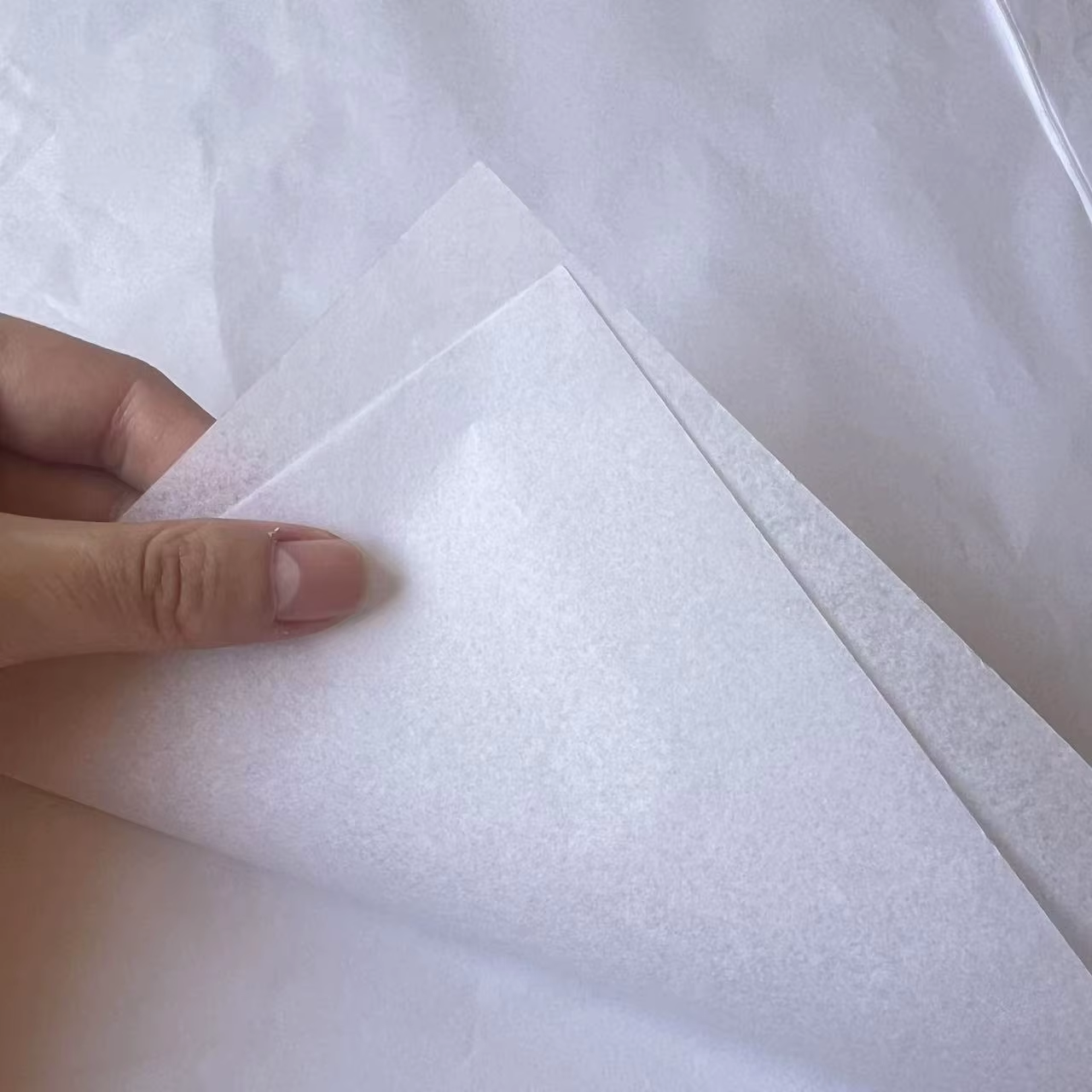 A pack-out review helps teams assess colour, format, and presentation together.
Use gift packing paper to make the experience feel deliberate
Gift packing paper can support a more deliberate unboxing experience when the design, material feel, and application are aligned. The aim is not simply to add more printing or decoration. It is to make the package feel coherent. A small monogram, brand colour, or seasonal pattern may be enough if it is clear at normal viewing distance and remains appropriate for the product.
When choosing gift packing paper, review colour beside the actual product rather than on a screen alone. A tone that appears warm in digital artwork can look different under warehouse lighting or beside a product with metallic, transparent, or strongly coloured surfaces. A physical sample lets the team see the complete presentation. That sample should include the folds, tape or closure method, label placement, and any tissue or filler used in the final pack-out.
This is where gift wrap personalised becomes a workflow decision as well as a design choice. If a packing team must reverse a roll frequently, cut awkward sheet sizes, or correct alignment on every package, the experience becomes less consistent. Ask: will the team work from continuous rolls, pre-cut sheets, or both? The answer may affect format choice more than an additional graphic detail does.
Four decisions that protect the intended brand impression
- Define the customer moment. State what the recipient should notice first: a calm premium feel, a festive reveal, a recognisable brand colour, or a personal message. Gift wrap personalised has more direction when the desired moment is specific.
- Match colour to the product and channel. Review printed colour alongside the product, mailer, labels, and any in-store display elements. Do not assume a colour reference will perform identically across every material or production run.
- Specify the usable format. Share product dimensions, typical order sizes, pack-out volume, and whether the material will be folded, wrapped, or layered. Gift wrap personalised needs a format the team can handle reliably.
- Approve through a pack-out trial. Test a small group of real parcels before committing to a larger order. Check coverage, folds, storage, handling, and how the finished result looks from the customer’s point of view.
Why a sample is more useful than a generic promise
In paper-based packaging, presentation depends on context. A material that feels suitable for a small retail item may not suit a larger, angular product or a high-volume fulfilment line. That is why a sample review is more valuable than an unsupported claim that a wrap will look premium, sustainable, or universally easy to use. Gift wrap personalised should be validated against the real item and process.
During sample review, record the artwork version, intended paper format, colour reference, product dimensions, closure method, and any questions that remain open. This gives purchasing, merchandising, and operations teams shared terms for the next conversation. It also makes repeat orders easier to discuss, because the team is referring to a tested presentation rather than a vague idea of “custom wrapping.”
Build a consistent experience without overclaiming
Personalisation has value when it makes the customer experience feel intentional and recognisable. It should not be presented as a shortcut to stronger loyalty or higher conversion without evidence from the business’s own customers. Instead, use gift wrap personalised to make brand cues visible at the point of receipt, then observe feedback, repeat-order patterns, and packing performance over time.
For B2B buyers sourcing decorative, coloured, white, or other paper-based presentation materials, the practical path is clear: start with the customer moment, convert it into a usable specification, and test it in a real pack-out. Gift wrap personalised is strongest when visual intent and operational fit reinforce each other. That is how a simple sheet or roll can support a more coherent brand impression among customers.