
 EN

Why foodgrade colored tissue paper is safe for direct food wrapping
Food presentation often calls for color: a bakery wants a branded liner, a confectioner wants a seasonal wrap, or a specialty retailer wants a neat layer around dry treats. The question is not whether colored tissue looks appropriate. The question is whether the exact material is appropriate for the food, the contact conditions, and the market where it will be sold. Foodgrade colored tissue paper can be a practical choice for direct food wrapping when its suitability is documented for that use. Color alone, paper weight alone, and a supplier’s general description are not enough.
From a procurement perspective, the most useful shift is from “Does this colored tissue paper look clean?” to “What evidence connects this specific paper, its colorants, and its converting process to our intended food-contact use?” That change makes sampling, approval, and repeat ordering much more reliable.
What “safe for direct food wrapping” actually means
Direct food wrapping means the paper touches the food itself rather than serving only as an outer decorative layer. Suitability therefore depends on the whole finished material: fiber source, additives, dyes or pigments, processing aids, printing or coatings if any, and the way the paper is used. A foodgrade colored tissue paper specification should describe the intended contact conditions instead of relying on a broad marketing phrase.
For example, dry cookies in a short-duration gift pack present a different contact scenario from oily pastries, moist produce, hot food, or food held for extended storage. Temperature, moisture, fat content, contact time, and whether the tissue is printed or laminated can all affect the information a buyer needs to review. A material that is suitable for one scenario should not automatically be assumed suitable for every other scenario.
Food-contact frameworks focus on whether substances can transfer from packaging into food at levels that could create a safety concern. U.S. FDA consumer guidance explains that food-contact substances used as food additives must be authorized for their intended use before marketing. In Europe, the general food-contact framework requires materials placed on the market to meet applicable safety requirements. These principles do not certify a particular tissue sheet; they explain why buyers need documentation matched to the intended application.
Why color needs its own verification step
Color is often the feature buyers care about first, but it is also a reason to ask more specific questions. The colorant system used in colored tissue paper should be assessed for the paper-and-food application, not judged by appearance. FDA guidance specifically addresses color additives in paper and paperboard intended for food contact. That is useful context for procurement teams: a colorant’s acceptability depends on how and where it is used.
This is also why visual sample approval cannot replace compliance review. A sheet may have the right shade, softness, and fold behavior while still lacking documentation for the actual food, contact duration, or destination market. If artwork, surface printing, fragrance, glue, or other conversion steps are involved, include those components in the review rather than treating the base tissue as the whole answer.
A practical verification checklist for buyers
Before approving foodgrade colored tissue paper for direct wrapping, request evidence that answers the following questions clearly:
- What food will touch the paper? State whether it is dry, fatty, moist, acidic, hot, chilled, or frozen, plus the expected contact time.
- Which market applies? Confirm the destination country or region so the supplier can provide documentation relevant to that market rather than a generic statement.
- What is the finished construction? List the base paper, colorants, inks, coatings, adhesives, and any other materials that can be part of the food-contact article.
- What documents support the claim? Ask for a current declaration or compliance statement, applicable test reports where relevant, traceability information, and the conditions or limitations covered.
- Does the production sample match the approved construction? Check color, odor, cleanliness, cut quality, storage condition, and any printed or converted elements during a pack-out trial.
The most useful questions are specific enough to expose a mismatch early. “Is it food grade?” may receive a yes-or-no reply. “Is this blue tissue suitable for direct contact with dry confectionery for up to 24 hours in our destination market, with no printing or coating?” gives the supplier a usable compliance scenario to assess.
How to run a sensible sample and pack-out trial
Paper safety review and operational fit should happen together. Start with a controlled sample: wrap the actual product, use the expected folding method, and hold it under normal storage conditions. Then inspect the food and the wrap for visible transfer, unexpected odor, tearing, linting, or moisture-related changes. These observations are not a substitute for regulatory testing, but they can uncover handling issues before a larger order is released.
Keep the approved sample, specification, lot details, and supplier documents together in the purchasing record. When a color changes or a new converter is introduced, treat that as a fresh verification point. In practice, this workflow is more dependable than approving one attractive sample and assuming all future colored tissue paper runs are equivalent.
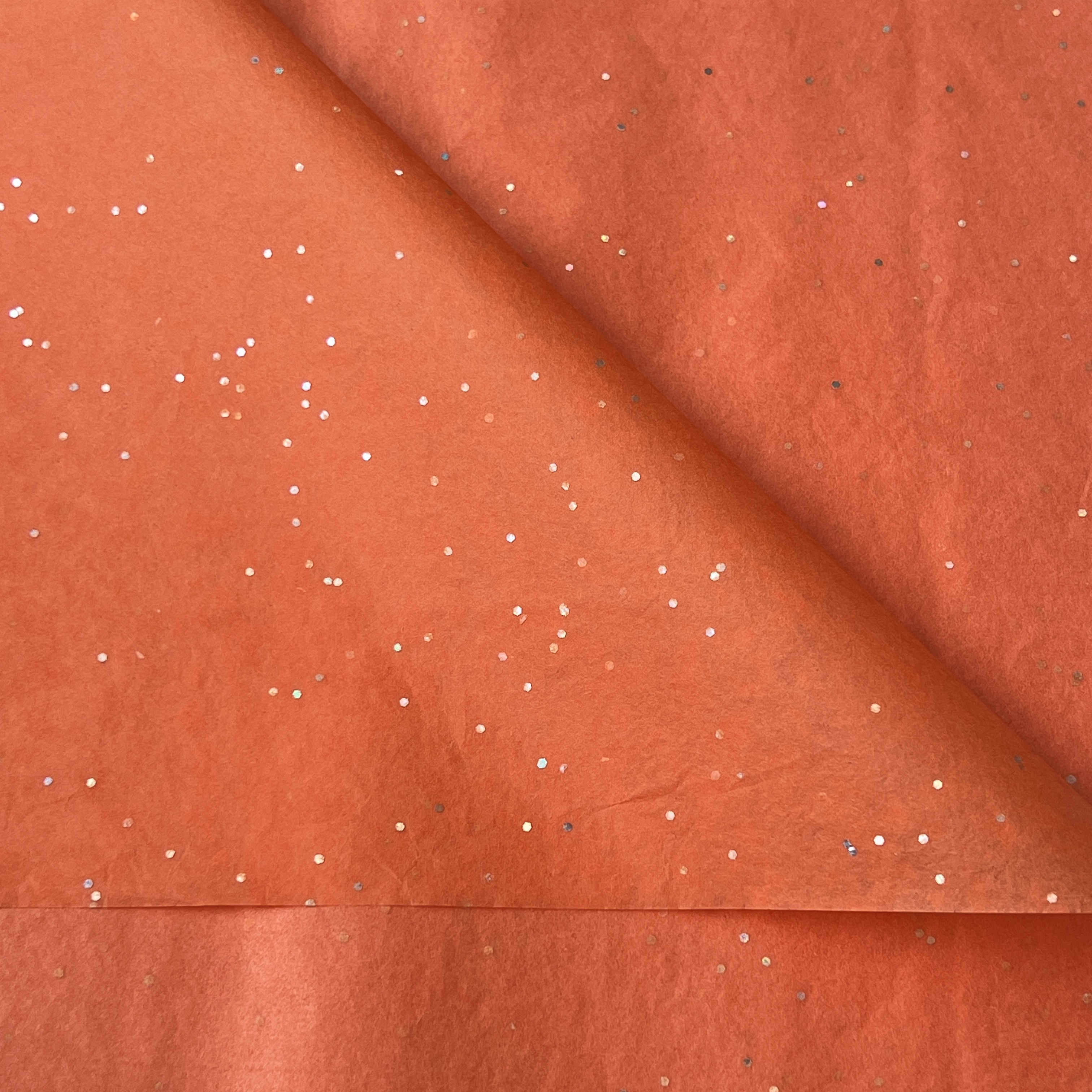 A pack-out sample helps teams check handling and appearance alongside documentation.
Common mistakes that create avoidable risk
One mistake is using decorative tissue as though every tissue product were designed for direct food contact. Another is copying a compliance statement from a different color, thickness, or finished construction. A third is overlooking the effect of printing, adhesives, or coatings added after the base paper was approved.
It is also worth separating food-contact suitability from broader claims. A paper can be recyclable, colored, lightweight, or visually premium without those qualities proving it is appropriate for direct wrapping. Conversely, a documented foodgrade colored tissue paper program should still be checked for practical properties such as cleanliness, foldability, and fit with the packaging workflow.
Make the purchase brief evidence-first
For buyers, the safest path is straightforward: define the food and contact conditions, identify the market, request documents for the exact finished material, and validate the approved sample in a real pack-out. This approach respects the role of color without turning color into a safety shortcut.
When sourcing foodgrade colored tissue paper, describe the use case in the RFQ and ask suppliers to state the scope and limits of the documentation they provide. A clear brief helps both sides avoid overclaiming, supports more consistent repeat orders, and gives the packaging team a practical basis for deciding whether a particular colored tissue paper option belongs next to the food or only outside the primary wrap.