
 EN

What Role Does Decorative Color Paper Play in Seasonal Shop Windows?
A seasonal window has only a few seconds to give passersby a reason to pause. Decorative color paper helps make that first impression legible: it can establish a seasonal mood, frame the merchandise, and make a small display feel intentional without demanding a permanent fixture. For a retail merchandiser, the useful question is not simply which shade looks attractive. It is how a paper palette supports the story the product and window need to tell together.
Color is one of the visual cues that can influence mood and perception in merchandising. That does not mean a red sheet automatically sells more than a blue one. It means decorative color paper gives a team a flexible visual language for signaling warmth, freshness, celebration, calm, or contrast before a shopper reads a sign. The strongest windows use this visual language to direct attention toward the product rather than competing with it.
It turns a seasonal idea into a visible focal point
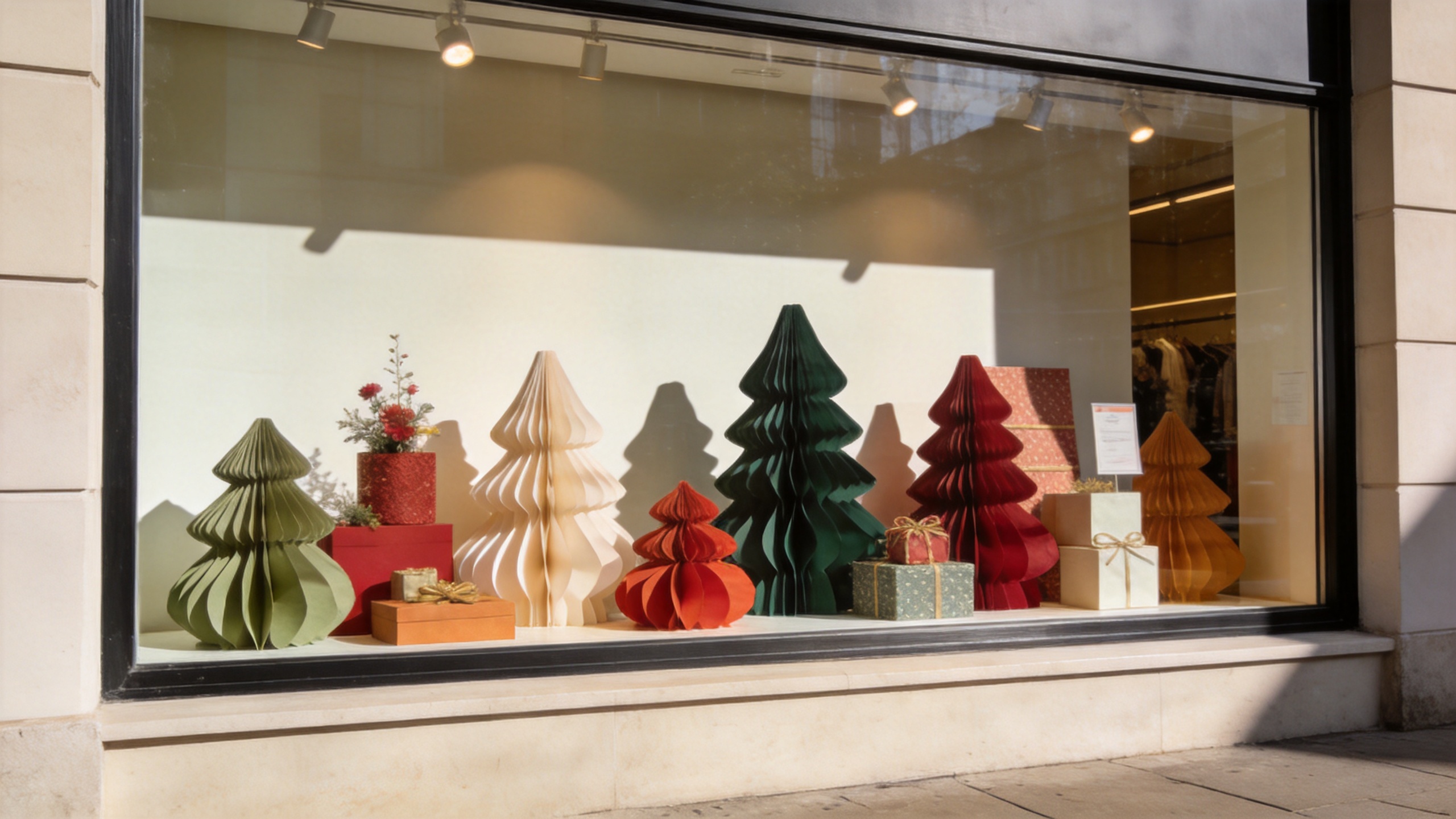
The first role of the paper treatment is to make the seasonal theme recognizable at a glance. A spring launch may call for airy pastels and cut botanical shapes; an autumn display may benefit from deeper rust, ochre, and forest tones; a winter promotion can use bright white, metallic-looking accents, or saturated jewel colors. The material can become a backdrop, a hanging layer, a wrapped plinth, a border around a message, or a set of simple folded forms.
Start with one dominant color family, one supporting color, and a neutral area around the hero product. This restraint keeps the color treatment from becoming visual noise. A shopper should be able to see the product first, the seasonal cue second, and the promotional message third. If every surface is patterned or intensely colored, the window may feel busy rather than inviting.
It creates depth without heavy construction
Shop windows often need dimension but have limited space, time, and installation tolerance. Decorative color paper is useful because layers can create foreground, middle ground, and background with relatively little bulk. A large sheet behind the product can establish the scene; a second, lighter layer can be cut or folded into shapes; a small foreground element can lead the eye inward. Even a modest paper display can look more considered when its layers leave enough negative space.
Paper also makes it easier to change the viewing angle. Before fixing anything permanently, stand outside the window at normal walking distance and look from both directions. Check whether the decorative color paper reflects glare, covers product labels, or casts shadows that make the hero item disappear. At first this may look like a color decision; more accurately, it is a color-and-lighting decision.
It links product color to a seasonal story
Good visual merchandising does not treat the window as a separate poster. A selected paper palette can pick up a small color from the merchandise, logo, packaging, or current campaign and scale it into the setting. For example, a display with neutral products may use a single seasonal hue to create energy, while brightly colored items often need a quieter surround. This connection helps the window feel curated rather than assembled from unrelated props.
When a color paper choice is unclear, place sample sheets beside the actual products under the window lighting. Screens and warehouse lighting can make a color look different from its in-store appearance. This simple comparison is especially important when a brand has a precise palette or when merchandise includes reflective, translucent, or very dark surfaces.
It supports fast seasonal changes and local adaptation
Seasonal displays are temporary by nature. Decorative color paper allows teams to refresh a story for holidays, local events, product drops, or short promotions without rebuilding the entire window. A reusable base fixture can stay in place while the decorative layers change. That makes color paper a practical choice for retailers that want frequent updates but need an approachable installation process.
The material is most effective when the team plans its removal as carefully as its installation. Note the window dimensions, hanging points, cutting templates, and storage method for pieces that can be reused. A quick photo of the finished layout and a labeled set of paper components can make the next seasonal reset smoother. This is the workflow side of the material: visual impact matters, but so does how easily a team can reproduce it.
How to choose paper for a window
- Define the message first. Choose whether the window should feel celebratory, quiet, playful, premium, or urgent before selecting a palette.
- Check the finish under real light. Matte, glossy, translucent, and textured decorative color paper respond differently to sunlight and interior lighting.
- Match scale to distance. Large color blocks read from across the street; small details are more suitable near the glass or product.
- Test attachment and safety. Confirm that the paper, adhesive, and hanging method suit the glass, local display rules, and the duration of the campaign.
- Keep the product visible. Use the paper treatment to frame the offer, not to conceal price, product detail, or the main call to action.
Use color paper as a system, not a last-minute prop
The most reliable seasonal windows give every element a job. The material can set a mood, build depth, guide the eye, and make a campaign easier to refresh. It is most effective when a team connects color to the product, tests samples in the actual window, and leaves room for the merchandise to lead.
In other words, color paper is more than decoration. Used with a clear seasonal concept and a practical installation plan, it can help a window feel timely, coherent, and worth a closer look. For a future display, begin with the story you want shoppers to notice, then let the chosen palette carry that story through the space.