
 EN

Why choosing a colored tissue paper manufacturer with food grade options matters
A colored tissue paper manufacturer can affect far more than the appearance of a wrapped item. When tissue may touch food directly, line a food-contact pack, or sit inside a presentation box, the buyer has to assess the paper, color system, converting controls, and supporting documentation together. That is a different buying decision from selecting decorative wrap for a non-food gift.
For procurement teams, the useful question is not simply, “Can this supplier make the shade we want?” It is: “Can this colored tissue paper manufacturer show that this material is suitable for our intended application and destination market?” Starting with that question makes samples, specifications, and approvals easier to manage.
Food grade is an application question, not a color claim
“Food grade” can sound like a universal material label, but food-contact suitability depends on how the paper will be used. Direct contact with dry bakery items, a grease-resistant barrier layer, and an outer decorative wrap can involve different risks and evidence requirements. The food product, temperature, moisture, contact time, printing or dye system, and receiving market all matter.
In the United States, food-contact substances that are food additives must be authorized for their intended use before marketing. FDA guidance also addresses color additives in paper and paperboard intended for food use. For buyers, that makes the color system a practical review point: a document for base paper alone may not answer whether the finished colored tissue paper is appropriate for the proposed contact conditions.
A capable colored tissue paper manufacturer should therefore ask clarifying questions rather than offering a blanket statement. Explain the end use, whether contact is direct or indirect, and where the finished package will be sold. That discussion helps the supplier identify the relevant documents and prevents a promising sample from becoming a late-stage compliance problem.
Why color control deserves its own review
Color is often the first attribute a brand notices, yet it can introduce the most overlooked approval risk. Deep shades, custom colors, metallic-looking effects, and printed surfaces may require different handling than plain white tissue. A buyer should ask what is being colored, whether color is added in the pulp or later in the process, and what evidence is available for the finished material under the intended conditions.
It is also worth separating visual acceptance from functional acceptance. A roll can look consistent under office lighting and still need evaluation for rub-off, odor, moisture behavior, or interaction with a particular food-packaging format. Ask for representative production samples, not only a small color swatch. Test the tissue beside the actual product and packing process whenever possible.
A supplier checklist for colored tissue paper
Use the same short checklist with each prospective colored tissue paper manufacturer. It keeps decisions comparable and gives quality, purchasing, and packaging teams a shared record.
- Define the use case: State the food type, direct or indirect contact, contact duration, temperature, moisture, and destination market.
- Request material details: Confirm basis weight, sheet or roll format, color reference, and any relevant converting requirements such as slit-roll width or sheet size.
- Review color-related evidence: Ask what supports the proposed color system for the specific application. Do not assume that a general declaration covers every shade or use.
- Check traceability: Agree how production lots, samples, specifications, and any declarations will be identified and retained.
- Run a realistic trial: Evaluate color transfer, odor, handling, and appearance within the finished pack before a volume order.
- Align change control: Specify how changes to color, fiber mix, coating, or production location will be communicated for re-evaluation.
What a manufacturer should be able to discuss
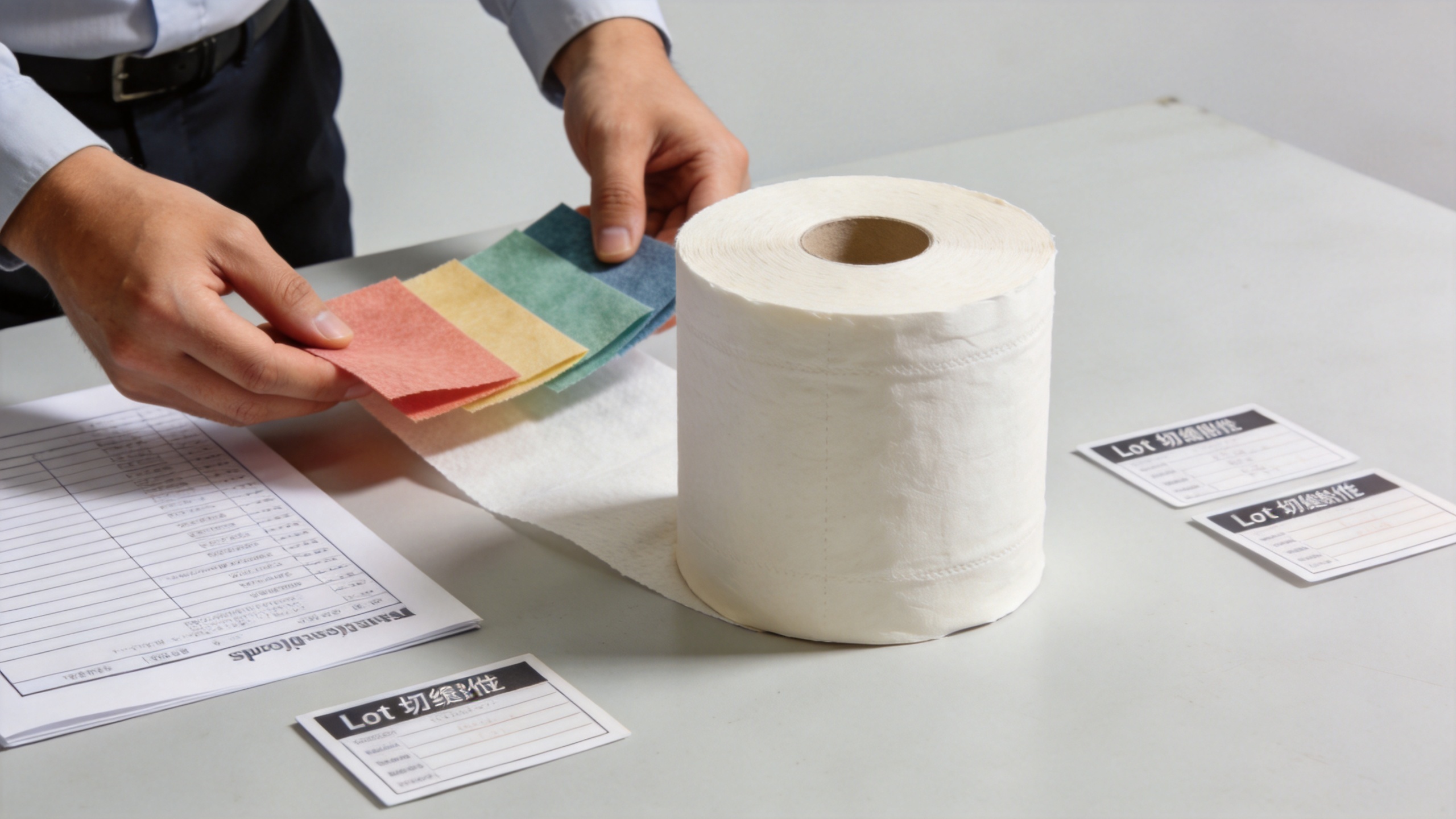
Strong supplier conversations are specific. Instead of responding only with a catalog color range, the manufacturer should be ready to discuss practical order details: how a shade is matched, what sample format will be supplied, what tolerances are agreed, and how a custom sheet or slit-roll format will be checked before shipment.
Putian C&Q Paper Co., Ltd. describes its offering around white, colored tissue paper, and food-grade paper, with custom slit rolls and sheets for packaging, decorative, and filling-paper uses. For a buyer, that type of product scope is a useful starting point—not a substitute for application-specific confirmation. The next step is to share the intended food-contact conditions and ask for the documentation and samples that relate to that exact use.
Certification can be relevant to sourcing objectives as well. For example, an FSC claim may be important for fiber sourcing or brand policy, but it answers a different question from food-contact suitability. Keep these approval streams separate so that environmental, visual, and safety requirements are each reviewed against the right evidence.
Build approval into the purchasing timeline
Food-contact review often takes longer than a simple color selection because it involves multiple stakeholders. Include sample review and document review before final artwork, seasonal launch dates, or production commitments. A practical sequence is to approve the color target, test the paper in the finished packaging configuration, review supplier documentation for the intended market, and then lock the specification for production.
For repeat programs, retain the approved sample, color reference, specification revision, and lot-traceability expectations. These records make it easier to investigate a variation and to decide whether a proposed material change needs another trial. They also help new team members understand why a particular colored tissue paper was selected.
Questions to send before requesting a quotation
- What food or packaging application will the tissue support, and will contact be direct?
- Which market will receive the packaged product?
- Which color, basis weight, sheet size, or roll width is required?
- What documentation can the supplier provide for the proposed finished tissue and color system?
- What production sample and change-control process will be used?
Including these details in an RFQ leads to a more useful response from a colored tissue paper manufacturer. It also signals that the buyer is evaluating the material as part of a packaging system rather than treating color as a standalone purchase.
The practical takeaway
Choosing a colored tissue paper manufacturer with food grade options matters because visual appeal and food-contact suitability must be assessed together. A supplier that can discuss the use case, provide application-relevant evidence, prepare representative samples, and maintain clear specifications helps reduce avoidable approval delays. Select the color you need, but approve the finished tissue for the conditions in which it will actually be used.