
 EN

Why packing paper is the workhorse of warehouses and shipping
A busy packing bench rarely needs another material that solves only one problem. It needs something a team can pull, fold, layer, and tuck into a carton without breaking the rhythm of the shift. That is why packing paper remains a familiar workhorse in warehouses and shipping operations. It can wrap, separate, stabilize, and fill open space, depending on how the packer uses it.
From a packaging-paper technical advisor’s perspective, the useful question is not simply whether to buy packing paper. It is how paper feel, basis weight, format, and handling fit the items, carton, and pace of the packing table. A low unit price is not automatically the useful comparison; a format that creates unnecessary handling can add friction all day.
One material, several jobs at the packing station
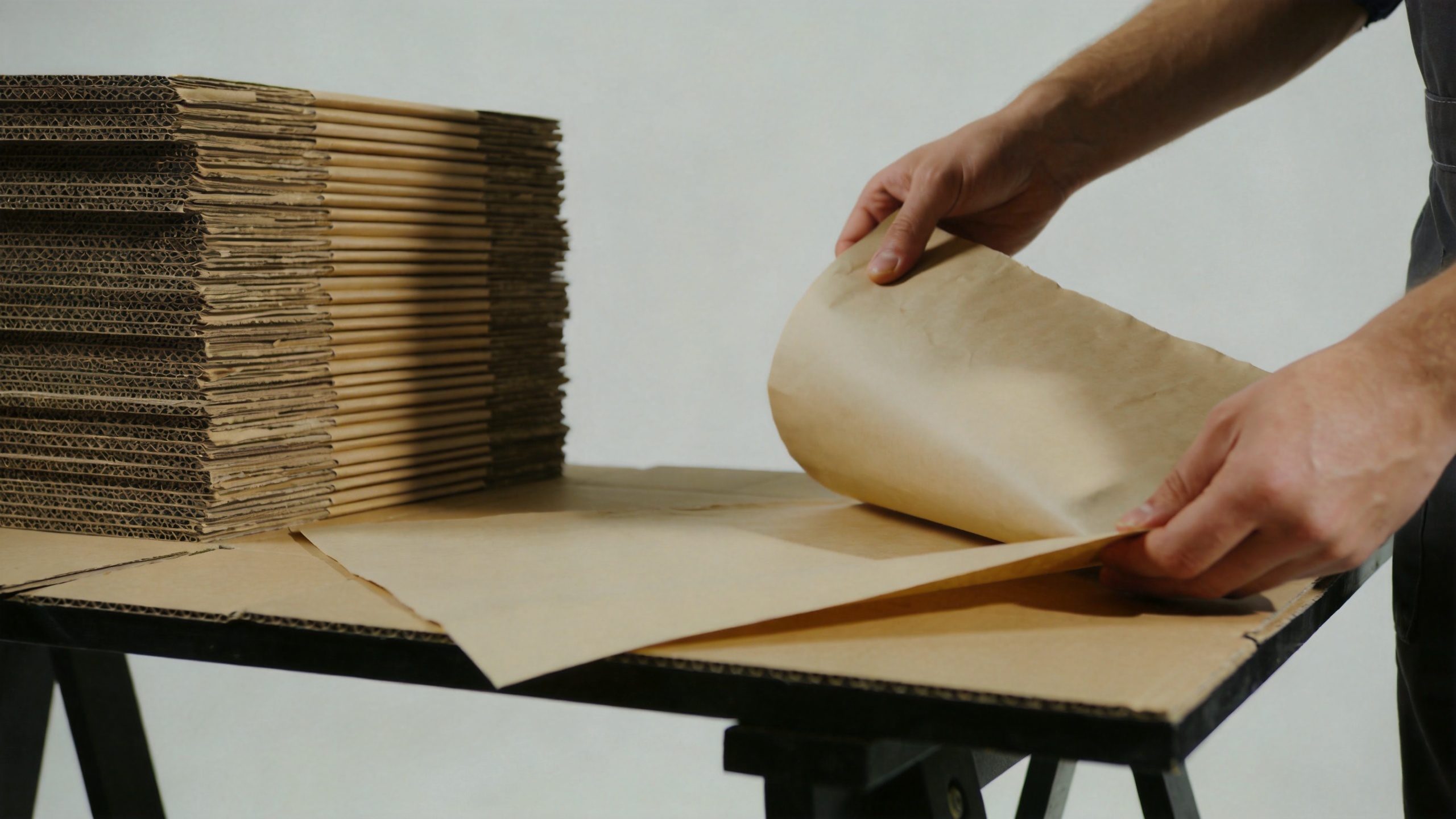
Packing paper works because it can take on different roles without turning the station into a collection of single-purpose supplies. A packer may use a flat sheet to separate surfaces, fold it around a delicate item, or crumple it to occupy a gap in the carton. The exact method changes with the product, but the underlying aim is consistent: arrange the contents so they have less room to shift while the package is handled and transported.
That distinction matters. Paper used as an interleaf is not doing the same job as paper used as void fill. Interleaving helps keep product surfaces apart. Wrapping adds a protective layer around an item. Void fill takes up unused volume after the item is placed in the box. When a team calls all three activities “padding,” it can be harder to diagnose why a carton still feels loose or why the station is consuming more material than expected.
Why warehouse teams return to packing paper
It adapts to inconsistent order profiles
Warehouse orders are often mixed: one carton may hold a small boxed item, the next an awkward assortment, and the next a set of products that need surface separation. Packing paper gives operators a material they can shape at the point of use. If the carton leaves a small channel around the contents, paper can be placed where it supports the load arrangement. If products need to be kept apart, a sheet can be folded into a simple separator.
That flexibility does not mean every paper grade suits every shipment. A fragile, heavy, moisture-sensitive, or unusually shaped item may call for a different material combination or a verified packing method. The practical advantage is that packing paper can be part of the decision rather than a substitute for it.
It supports a repeatable packing sequence
A reliable station usually follows a simple order: choose an appropriately sized carton, place the product, add separation or wrap where needed, fill remaining open areas, then check the closure and movement. Packing paper fits naturally into that sequence because the same supply can appear at more than one point. Teams can standardize where paper is staged and how operators pull it, while leaving room for judgment on mixed orders.
At first this may look like a material choice; more accurately, it is a material-and-workflow choice. Paper that is easy to reach but difficult to tear or dispense can slow the packer. Paper supplied in a usable size but stored too far from the bench can create the same problem.
It makes format a visible operating decision
Rolls and sheets are not interchangeable in every setup. Rolls can fit a continuous packing routine where a team pulls material to the required length. Pre-cut sheets can make sense when manual packing, repeatable pack-outs, or a consistent separation layer are the priority. The relevant question is not only which format costs less per unit, but how it behaves in the actual workflow.
Before ordering, observe a normal hour at the station. Does the operator repeatedly tear short lengths? Are cartons packed one at a time or in a steady stream? Is paper used mainly to wrap, line, or fill? The answers provide a better starting point than a generic roll-versus-sheet preference.
Frequently Asked Questions
What is packing paper used for?
Packing paper can wrap an item, separate surfaces, or fill a small open area in a carton.
Can packing paper be used as void fill?
Yes. Packing paper can be shaped around a positioned product when the pack-out calls for manageable void fill.
Should a warehouse use packing paper rolls or sheets?
Packing paper rolls often suit a continuous pull-and-tear routine, while packing paper sheets can simplify repeatable manual pack-outs.
Does packing paper replace every protective material?
No. Packing paper should be evaluated with the item weight, shape, carton fit, and shipment conditions.
How should a team test packing paper?
Test packing paper in the carton and workflow the team actually uses, then review handling and material consumption.
Can packing paper separate products?
Flat packing paper layers can separate product surfaces when a pack-out needs an uncomplicated barrier.
Where should packing paper sit at a packing station?
Place packing paper within reach of the carton so operators can use the material without extra movement.
What should buyers specify when sourcing packing paper?
Describe how packing paper will be used, the preferred format, carton sizes, and specifications that require sample confirmation.
Is packing paper only for fragile shipments?
No. Packing paper may support orderly packing for many shipments, but the method must fit the product and transport context.
Why is packing paper a warehouse workhorse?
Packing paper serves several routine roles at one station, helping teams manage wrap, separation, and open carton space.
A practical selection checklist for B2B buyers
When discussing packing paper with a supplier, define the application before requesting a broad recommendation. Clarify whether the paper will be used for wrapping, filling, separating, or presentation. Then share the pack-out context: product size range, carton sizes, handling speed, whether sheets or rolls fit the operation, and any requirements that need to be verified through current specifications or samples.
Putian C&Q Paper Co., Ltd. works across packaging, decorative, and filling-paper applications. For a sourcing conversation, that context can help frame the right questions about format and intended use. It should not replace confirmation of current material specifications, sample behavior, or the conditions of a particular shipment.
Make the packing paper decision operational
The strength of packing paper is not that it is a universal answer. Its strength is that one flexible material can support several routine tasks when the warehouse has a clear pack-out method. Start with the use case, match the format to the station, and test the paper in the carton configuration your team actually uses.
That approach turns packing paper from a generic consumable into a practical part of shipment preparation: a material selected for the role it has to play, not just for the space it occupies on a shelf.