
 EN

Why Custom Black Tissue Paper Matches Sophisticated Brand Aesthetics
For a premium unboxing moment, the wrapping inside the box has to do more than keep a product tidy. Custom black tissue paper can create a quiet, deliberate first layer between the customer and the item they bought. It frames jewellery, cosmetics, apparel, stationery, and gift sets without asking the product packaging to do all the visual work.
As a B2B packaging buyer, I would not assess that effect from a swatch alone. I would compare it with the pack-out workflow, the box interior, the printed mark, the way staff fold it, and what a customer sees when the lid opens. That is the appearance side. The next question is how the material reaches the packing table and performs there.
Black gives a premium system a clear visual anchor
Black is widely used in packaging because it can signal restraint, elegance, and exclusivity. In practice, its value is not that every brand should use it. Its value is that it creates a stable background for the choices a brand has already made: a pale logo, metallic foil, a coloured carton, or the texture of the product itself.
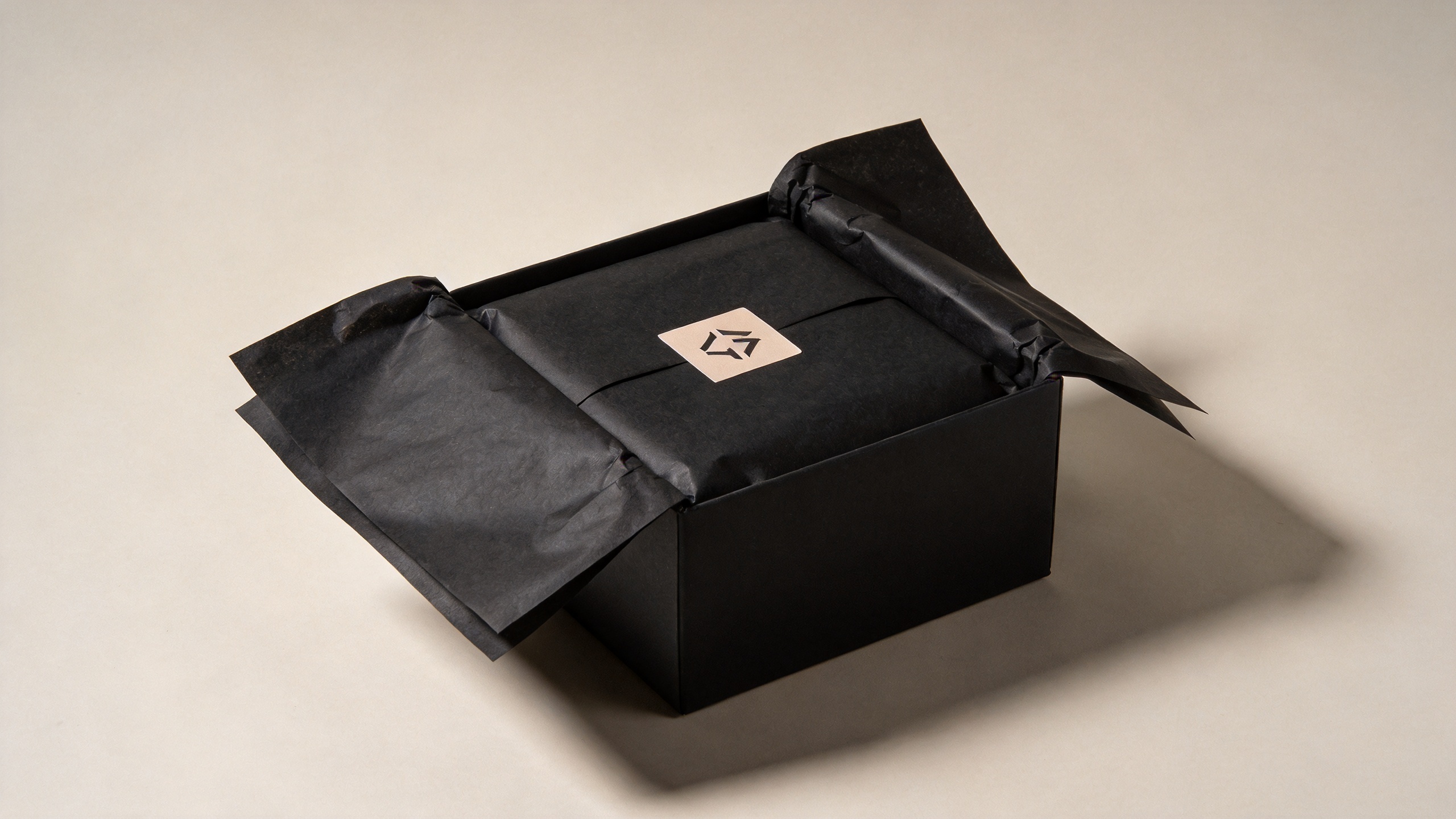
Custom black tissue paper is particularly effective when the outer package has been kept simple. A black inner wrap can make a white wordmark, cream ribbon, silver seal, or brightly coloured product feel more intentional by contrast. It can also help a multi-item order look composed when several shapes need to share one box.
The relevant question is not only whether black looks luxurious, but how it behaves in the whole packing workflow. A dark sheet that clashes with the carton, obscures a care card, or looks uneven after folding may weaken the result. A well-planned black tissue paper treatment should support the product rather than compete with it.
Start with the opening sequence, not the colour alone
A useful way to evaluate custom black tissue paper is to follow one package from preparation to presentation. At the packing table, the team needs a format that is comfortable to pick up, fold, and close around the item. Inside the box, the tissue needs enough visual coverage to make the reveal feel complete without adding unnecessary bulk. At the unboxing stage, the print, fold line, and closure detail need to read clearly in normal light.
This sequence changes the briefing. Instead of writing “black tissue” as a single line on an RFQ, list the details that affect the result:
- the product size and whether it needs full wrapping or a protective top layer;
- the box’s interior colour and any ribbon, sticker, or insert card already planned;
- the artwork position, logo scale, and the number of colours to be printed;
- the sheet or roll format that suits the packing line; and
- the level of colour consistency expected across repeat orders.
One attribute rarely settles the choice. Custom black tissue paper usually needs a short set of priorities, because the same paper has to serve brand presentation, day-to-day handling, and purchasing requirements.
Why contrast makes brand details easier to notice
Premium packaging often relies on small visual signals rather than a crowded design. A subtle logo pattern, a narrow foil mark, or a repeating monogram can gain presence against a dark ground. When the artwork and paper are planned together, custom black tissue paper can make the inside of a parcel feel connected to the outer box instead of looking like an afterthought.
Contrast should be tested with the real materials. A highly detailed black-on-black print may be difficult to see, while a light ink or metallic accent may be more legible. The same applies to the product: a black bottle, garment, or accessory can look dramatic against black tissue, but it may need a lighter tag, card, or separator to remain easy to identify. Sample approval is the practical place to check these relationships.
For this reason, buyers should ask what affects total handling, not only unit appearance. A visually ambitious pattern can be appropriate, although the final fit should be confirmed with the intended folding method and the actual pack-out team.
Customisation turns a common material into a brand touchpoint
Plain black tissue can already look polished. Customisation gives it a more specific role. Repeated logos, a restrained pattern, a campaign message, or coordinated artwork can help a customer recognize the sender before reaching the product. The effect is strongest when the design follows the same visual rules as the rest of the brand: spacing, typography, colour accents, and tone.
For many B2B buyers, custom black tissue paper is not intended to carry every marketing message. It is a supporting surface. A simple repeat pattern may make more sense than a large statement placed where folds will interrupt it. Likewise, artwork intended for a gift box may need a different scale from artwork intended for e-commerce apparel wrapping.
Before approving artwork, compare like for like: view a printed sample in the intended sheet size, place it in the actual box, and inspect it after a normal fold. That process reveals whether a design is refined in use or merely attractive on screen.
Material and colour decisions still matter after the mood board
Sophistication is partly visual, but it is also physical. The feel of the tissue, the way it drapes around an item, the apparent depth of the dark colour, and the condition of the sheet after handling all influence the result. Ask the supplier which characteristics can be specified or sampled rather than assuming they are identical across every black tissue paper option.
Colour consistency deserves special attention for repeat packaging programs. Brands using a dark wrap alongside exact logo or carton colours should make sample approval, production tolerances, and reorder communication part of the conversation. This is especially important when black tissue is expected to create a uniform background across several product lines.
Documentation can be another selection point. FSC chain-of-custody certification is designed to verify tracked use of forest-based materials through the supply chain; it is not a shortcut for making broader material claims. If this matters to your program, flag what needs confirmation: the applicable certification, the product specification, and the documentation available for the particular order.
Build a black tissue paper brief that a supplier can act on
A clear brief reduces unnecessary back-and-forth and gives the supplier a better basis for recommending a workable option. Put the desired premium look into operational terms:
- Describe the use case. State whether the tissue wraps a single product, lines a rigid box, separates items, or finishes a gift set.
- Share the visual system. Provide box colour, logo artwork, print preferences, and a reference for the level of contrast you want.
- Confirm the format. Specify sheet dimensions or roll requirements, then relate them to the item and packing method.
- Request a relevant sample. Review the actual black tissue paper with your product and closure details, not in isolation.
- List evidence needs. If sourcing documentation, material details, or repeat-order colour controls matter, ask which items can be supplied and verified.
Putian C&Q Paper Co., Ltd. describes its business as supplying white, coloured, and food-grade tissue paper and offers custom slit rolls and sheets. Its company profile also notes FSC certification, 11 patents, and annual output over 4,000 tons. Those profile details can be useful starting points for a discussion, but buyers should confirm the availability and suitability of any capability or documentation for the exact custom black tissue paper specification they intend to order.
Use the final review to protect the sophisticated effect
Before moving from sample to repeat production, inspect the package as a customer would. Open the box under ordinary lighting, check that the tissue sits neatly around the item, and make sure the printed detail remains visible after folding. Then look at the packing table: can the team reproduce the presentation without slowing the process or needing excessive material?
A refined pack-out is usually the result of these small decisions working together. Custom black tissue paper can give a brand a confident, sophisticated backdrop, when colour, artwork, format, handling, and documentation are treated as one decision set. That approach leaves room for the product to be the focal point while making the full unboxing experience feel considered.