
 EN

How silk tissue paper upgrade unpacking experience for luxury jewelry brands
For a jewelry customer, the reveal begins before a ring, pendant, or bracelet is visible. A box lid lifts, a layer opens, and the material nearest the piece sets the pace. Silk tissue paper can make that sequence feel considered when it is chosen for the actual box, product finish, and packing routine—not just for a flattering swatch.
As a gift-wrap and retail merchandiser, I would treat silk tissue paper as a presentation layer first. It can soften the first visual impression, frame a small item, and make the reveal less abrupt. It should not be asked to prove a product is luxurious on its own. The jewelry, box construction, color palette, fold, and handoff all shape the result.
Start by defining what “silk” means in the request
The term can be confusing. Search results use it for both tissue-like packaging paper and actual silk textile. For a jewelry packaging brief, ask whether the buyer means a soft, fine paper with a silky appearance or a genuine fabric layer. That clarification affects cost, handling, sourcing questions, and how the material behaves around clasps, stones, and inserts.
When the request is for silk tissue paper, document the paper format, color reference, size, and intended use. A description such as “soft ivory silk paper” is not enough for a repeatable pack-out. A better request states whether the material will line a rigid box, wrap a pouch, create a folded reveal, or separate several small components.
Build the reveal from the outside inward
A useful way to assess silk tissue paper is to follow the recipient’s hand through the opening sequence. Start with the outer carton and box, then consider the insert, the tissue layer, and the jewelry itself. This sequence keeps a decorative choice connected to the practical reality of packing.
- Set the first contrast. Choose a tissue color that supports the box and jewelry rather than competing with them. View it beside the real metal tone, stone color, ribbon, and printed card.
- Decide what the layer should reveal. A loose sheet can create a soft pause before a boxed item appears. A carefully folded sheet can frame a pouch or certificate. The right choice depends on the item’s size and the desired opening motion.
- Check the contact points. Make sure the silk tissue paper does not snag on a setting, cling where that is unwelcome, or obscure a piece the customer should see immediately.
- Repeat the motion at the packing table. What looks elegant in a one-off mockup may be slow or inconsistent during a busy fulfillment run. Test the actual fold and placement with the people who pack orders.

Why a sample matters more than a color-only decision
Luxury presentation often depends on small visual relationships. Under warm shop lighting, a pale sheet of silk tissue paper may read differently than it does under warehouse lighting or in a product photograph. The same is true for metallic surfaces and colored stones. A sample review should therefore include the intended box, insert, jewelry, printed materials, and lighting as far as possible.
Review more than color. Look at how the sheet folds, whether it holds a clean edge, how much visual coverage it creates, and whether the packer can place it consistently. If a brand wants a deliberately airy, layered look, test how much tissue is required; if it wants a crisp reveal, test a smaller, more controlled fold. This is the difference between choosing a look and choosing a workable pack-out.
Use silk paper as a quiet brand cue
Silk paper can work well when it supports an existing identity. A deep color can make a bright metal finish feel more prominent; a muted tone can make the package feel calm and restrained. Neither result is automatic. Contrast, print treatment, and the amount of visible material determine whether silk tissue paper feels intentional or simply fills space.
A practical approach is to create two or three sample directions: one close to the box color, one with a deliberate contrast, and one neutral option. Compare them with the actual piece in place. This gives merchandising, operations, and brand teams shared terms for a decision instead of relying on broad labels such as “premium” or “elegant.”
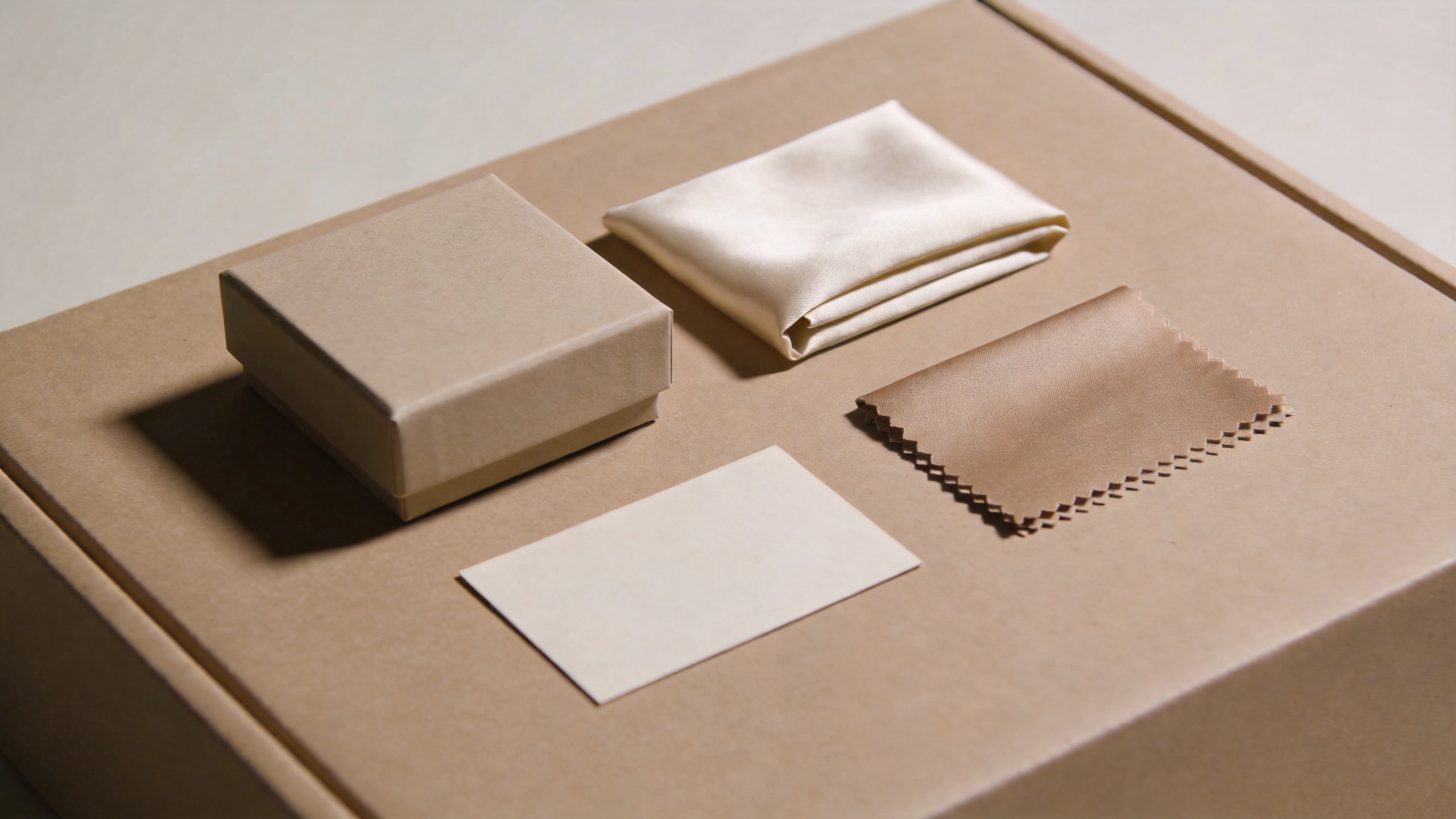
Keep the packing workflow in the decision
The most polished silk tissue paper concept can become inconsistent if the format is difficult to stage, separate, or fold. For recurring orders, ask how sheets will be stored at the packing table, how often colors change, and whether different jewelry sizes need different folds. These questions are especially useful for mixed orders, where a necklace, earrings, and a gift note may share one box.
Try a short pack-out trial before committing. Time is not the only measure. Watch for wrinkled corners, variation between packers, excess material that hides the item, and any extra handling needed to reach the intended reveal. If the tissue must be repositioned repeatedly, a different sheet size or fold may produce a more reliable experience.
Ask evidence-aware sourcing questions
Some brands also want silk tissue paper to support a paper-sourcing story. Treat this as a verification task, not a default claim. If FSC-related language is important, request current chain-of-custody documentation and confirm what claim can be used for the specific material and order. A paper packaging supplier may be able to support that discussion, but certification or recycled-content claims should not be assumed from appearance alone.
A compact approval checklist
- Does the brief clearly distinguish tissue-like paper from actual silk fabric?
- Has the selected silk tissue paper been viewed with the real jewelry, box, insert, and printed card?
- Does the color support the product under the lighting customers are likely to encounter?
- Can the team repeat the fold and placement during a normal pack-out?
- Are any sourcing, recycled-content, or certification statements backed by current documentation?
Make the reveal feel deliberate
For luxury jewelry brands, silk tissue paper is most useful when it turns an ordinary protective layer into a measured reveal. Define the material precisely, sample it beside the actual product, and test it in the real packing workflow. Those steps help a brand use silk tissue paper with more consistency—and help the customer experience a package that feels thoughtfully assembled rather than generically decorated.